
POST MONDAY-FRIDAY - FOR SAME DAY POSTING ORDER BY 11AM
Product Description
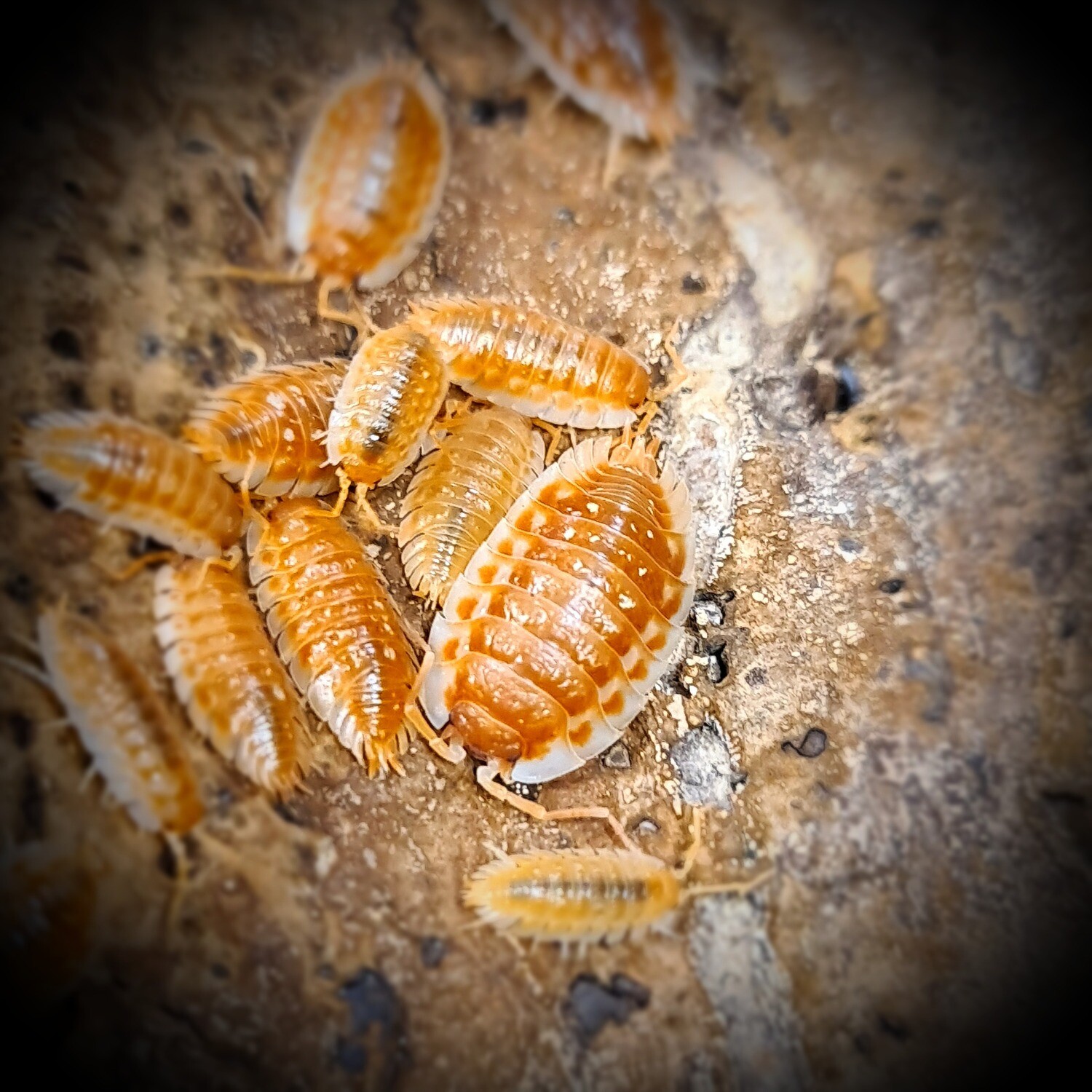
Oniscus asellus "Orange" is a vibrant and warm color mutation of the classic European "Common Woodlouse." This designer lineage replaces the typical slate-grey tones with a beautiful sunset-orange to burnt-sienna coloration. Often featuring lighter, translucent margins, these isopods look like small pieces of amber moving across the forest floor.
Known for their broad, flattened body shape and impressive "skirted" appearance, Oniscus asellus is a staple for hobbyists who value both aesthetics and utility. They are active, fast-growing, and bold, making them excellent display animals. Because they are so prolific and possess a high metabolism, the "Orange" morph is a premier choice for a colorful Clean-Up Crew in temperate bioactive vivariums, as they are tireless workers in breaking down organic waste.
Perfect for autumn-themed displays, temperate bioactive setups, and beginner keepers who want a hardy, fast-breeding species with a high-end color profile.
Species Information
- Species: Oniscus asellus "Orange"
- Morph: "Orange"
- Origin: Northern & Central Europe (Selected lineage)
- Size: ~1.5–1.8 cm (Broad, flat, and robust)
- Activity Level: High / Very Bold
- Rarity: Uncommon / Highly Sought After for Color
Care Requirements
- Difficulty: Very Easy (Extremely resilient)
- Humidity: Medium to High. This species is a "moisture-lover." Maintain a 60/40 moisture gradient: a large, consistently damp moss area is vital to prevent desiccation.
- Temperature: 15–23°C (59–74°F). Being temperate specialists, they thrive in cooler conditions and should be kept away from extreme heat (above 26°C/79°F).
- Ventilation: Moderate. They prefer the stable, humid air of a forest floor over high-airflow environments.
- Substrate: Nutrient-rich organic soil mix with plenty of decaying wood and soft leaf litter.
Must Provide:
- Flat Hides: Pieces of cork bark or flat stones. Their flat bodies are designed to cling to the underside of surfaces.
- Heavy Leaf Litter: Oak and Beech are their primary diet.
- A large, consistently damp "hydration station" (Sphagnum moss).
- Constant access to calcium (cuttlebone).
Origin and Distribution
Oniscus asellus is native to Northern and Central Europe, commonly found in damp woodlands and under the bark of fallen hardwood trees.
The "Orange" morph is a result of selective breeding from individuals that naturally express erythrin (red/orange pigment) instead of the usual melanin. Because they originate from regions with distinct seasons, they are very hardy against temperature drops but rely on a damp microclimate to facilitate their breathing through pleopodal lungs.
Diet
- Primary: They are powerhouse decomposers of leaf litter and white-rotted wood.
- Protein: Moderate demand. Provide fish flakes, dried shrimp, or isopod pellets 1-2 times a week.
- Vitamins: They enjoy supplemental feedings of carrots, squash, and sweet potato (which also helps support their orange pigmentation).
- Calcium: Essential for maintaining their wide, armored carapaces.
What You Receive
- Starter culture of X Oniscus asellus "Orange" isopods.
- Mixed sizes (juveniles and sub-adults) to ensure a rapidly expanding, colorful colony.
Why Buy From Us
✔ Vividly colored, healthy captive-bred "Orange" stock.
✔ Secure and professional packaging for guaranteed live arrival.
✔ A hardy and high-energy species that adds a warm glow to any bioactive collection.